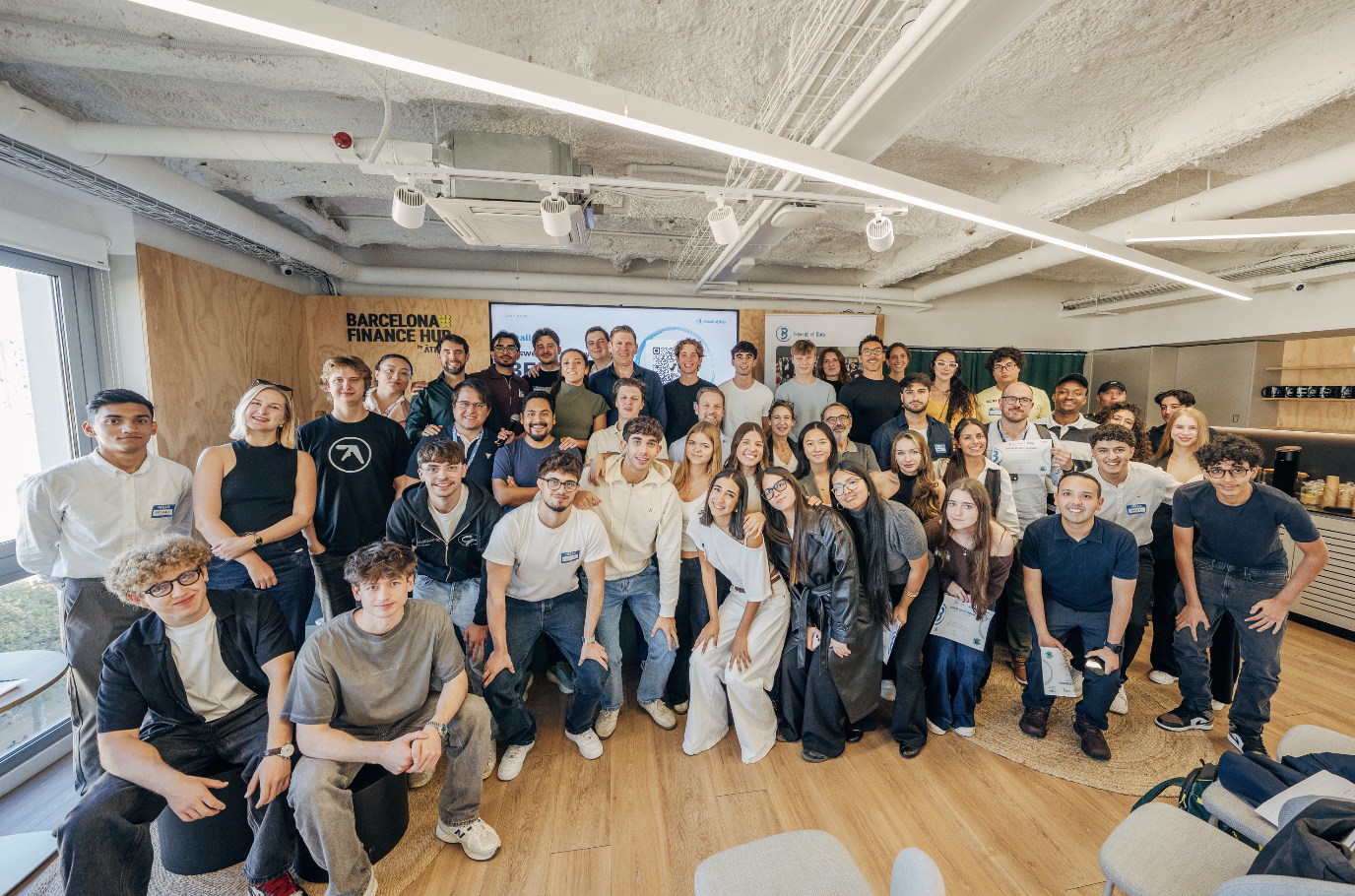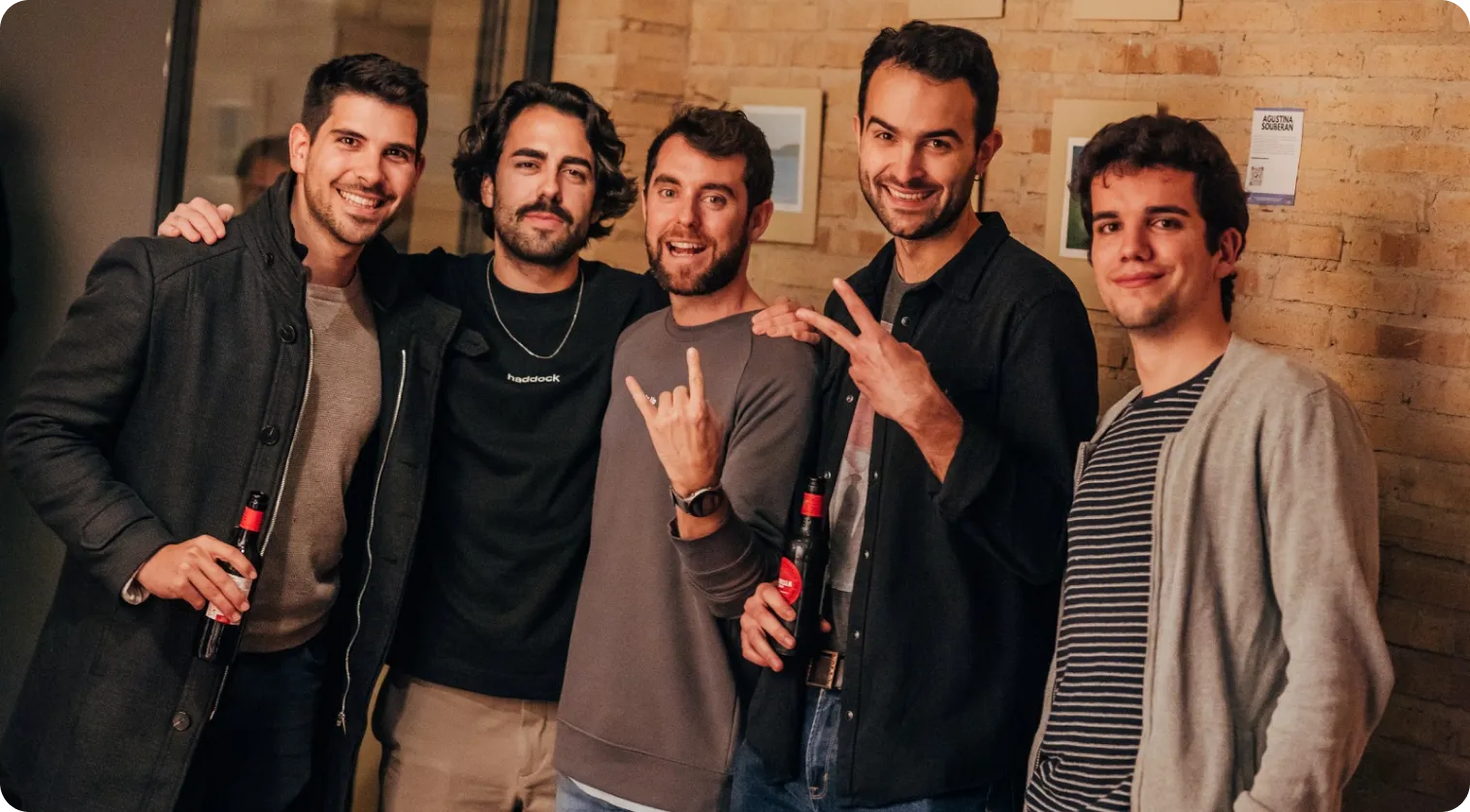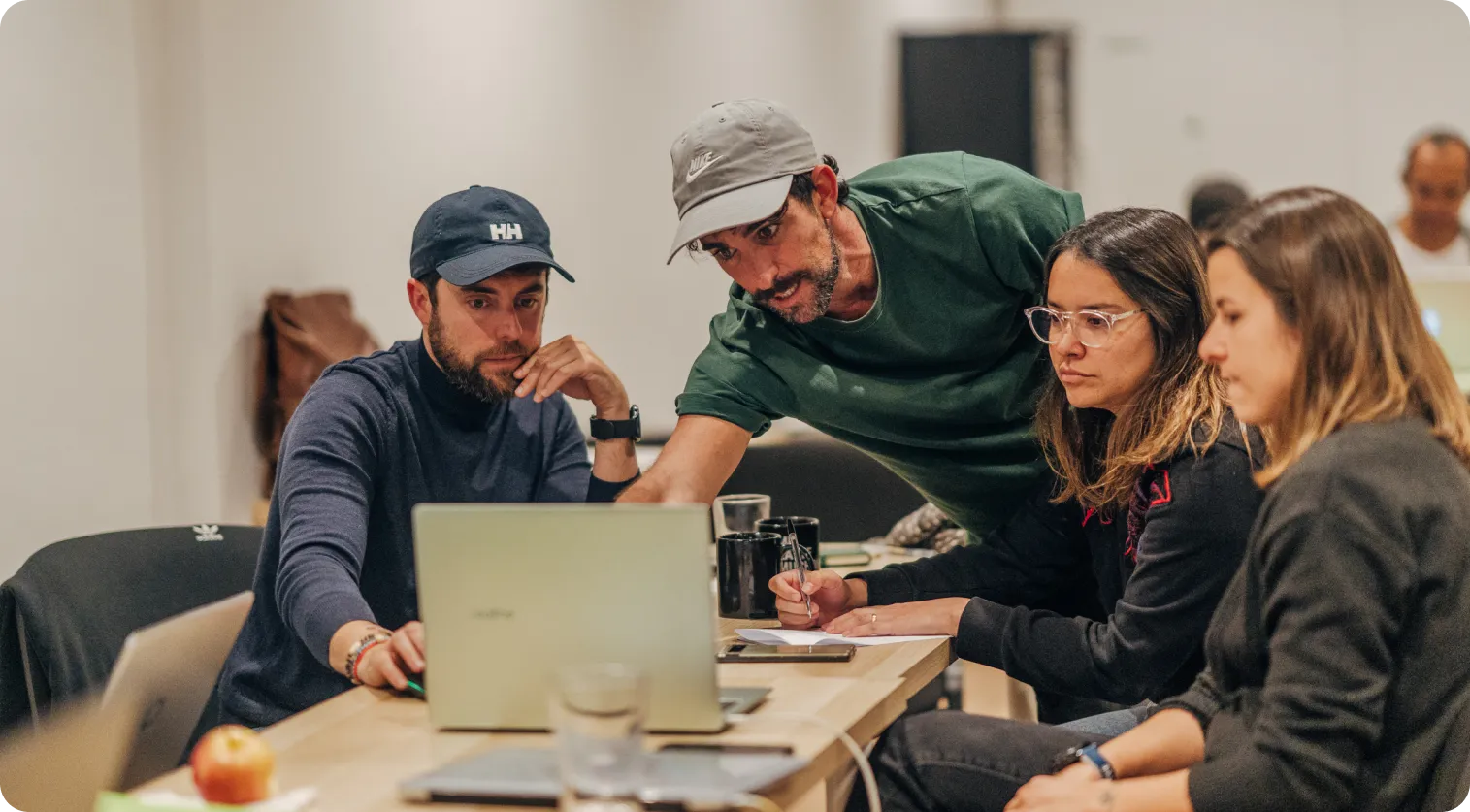
The Dream Big Edition, co-hosted by Friends of Bata and Aticco Lab at the Barcelona Finance Hub, gave students one day, AI tools and a roster of mentors to go from strangers to a three-minute pitch.
BARCELONA - 9 October 2026
Fifty students from 31 countries and 20 schools and universities walked into the Barcelona Finance Hub at 9am as strangers. By 3:30pm, they were pitching startup concepts on stage, in English, in three minutes each. This is Founders of Tomorrow, the one-day entrepreneurship experience co-organised by Friends of Bata and Aticco Lab. Its premise is simple: not a competition, an ignition session. Teams form in the morning, pick one idea worth building, prototype it in the afternoon with AI, and present it to a jury before the day ends.
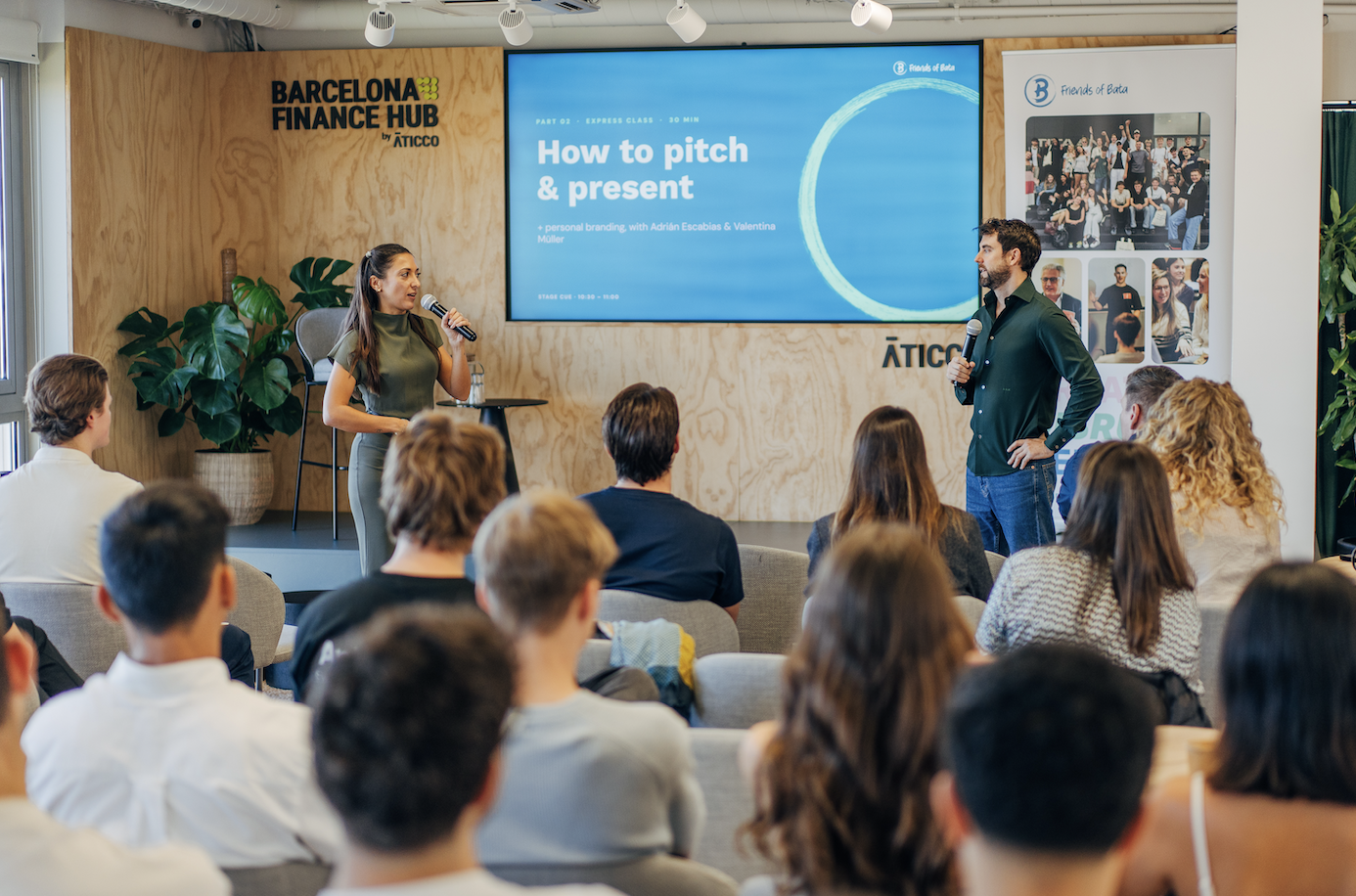
The Dream Big Edition opened with founder and investor talks from Enrique Alvarado Hablützel (founder, CHI Impact) and Roberto Longo (board member and senior advisor, Triple B), and a testimonial from Biel Mas, co-founder of Revvo, who sat in the participants’ seat at a previous edition just four months ago. Valentina Müller (Platform Lead, Friends of Bata) and Adrián Escabias then ran an express class on pitching, body language and personal branding, followed by a hands-on MVP session with Javier Mateache, CEO of Nomu Labs and Lovable expert.
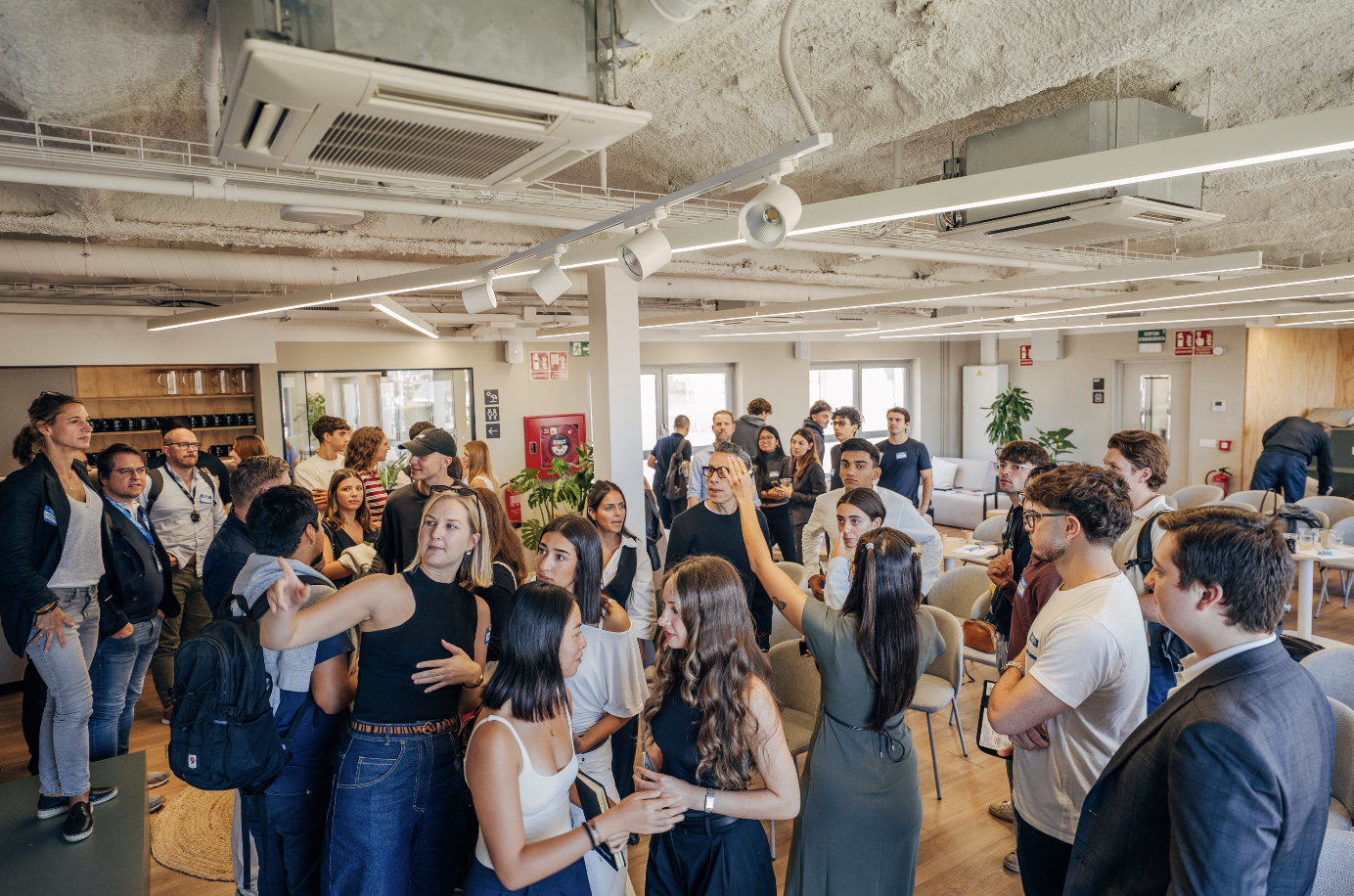
In the afternoon, 124 teams built working landing pages with Lovable, the AI no-code tool, guided by mentors from across Barcelona’s startup ecosystem, including Atomic4 VC, Eurecat, Neruj Studio, T-Innova, TeamLabs and Zim Connections. Mentors saw the format work in real time. “In a few hours, the ideas didn’t get better. The way they were told did,” said Justine Desardurats, who mentored teams throughout the day. Xavier Trallero Guillot (T-Innova) drew the same lesson from his team: “The human part still decides everything: aligning a team, making decisions and telling the story with confidence.”
What the teams built: pensions, housing, hate speech and fridges
Twelve of the landing pages are live, and the range says as much about the format as the pitches did. Housing came up twice, from opposite directions: Dora matches remote workers with work-ready homes in Madrid and Barcelona for stays of 1 to 11 months, while OneRoof pairs older people living alone, and the spare rooms in their homes, with students searching for affordable housing. Two teams went after money anxiety at different life stages: Yett helps 18-to-34-year-olds turn investing into a weekly commitment rather than a vague intention, and Pension Intelligence brings pensions scattered across countries into one retirement projection, starting with the Netherlands and Spain. Ooopsy, an insurtech add-on for online checkouts, refunds damaged, late or lost orders of $1 to $50 in minutes, and commits 30% of profits to a donation pool.
Education and early careers were the other big theme. CareerLab lets students aged 15 to 18 try real careers inside real companies, from startup sprints to finance shadowing in London, before choosing a degree. Nearsy connects students with mentors who passed the exact course, and the exact professor’s exam, they are facing. Local businesses got their share too: Resenia drafts AI replies to customer reviews in the owner’s own voice, and Empop scans more than 40 official bulletins and databases to match small businesses with grants, awards and training, with an assistant that helps prepare the applications. Rounding out the set: ServiNest, a repair subscription for Barcelona buildings booked over WhatsApp in English, Spanish or Catalan; Shelfie, a connected-kitchen concept that detects what is actually inside your fridge; and Red Button, which reports, escalates and tracks online hate to removal through trusted flagger channels, a project born from the abuse football referees receive for doing their job.
The pages themselves show how far an afternoon with AI tools now goes. Most are not static mockups but working product demos: a simulated WhatsApp repair booking, a click-through hate-report flow, a checkout with one-click delivery protection, a smart fridge you can open and stock. Several include full pricing, business models and market sizing; OneRoof’s pitch page backs its story with data from Spain’s national statistics institute, the Barcelona city council and the WHO. Twelve teams, at least seven sectors, and audiences from teenagers to pensioners to small business owners: not bad for one day.
Recognition, not a podium
For Valentina Müller, who organised and moderated the day, the pitches confirmed what she teaches: “Your idea is only as strong as your ability to make a stranger care about it in three minutes.” Across the 14 pitches she saw the same patterns: presenters rushing, body language left at the door, buzzwords filling space where the problem should be. “Fifty strangers walked in at nine in the morning. By mid-afternoon they were on stage telling stories that made a jury care. That is what ignition looks like,” she said.
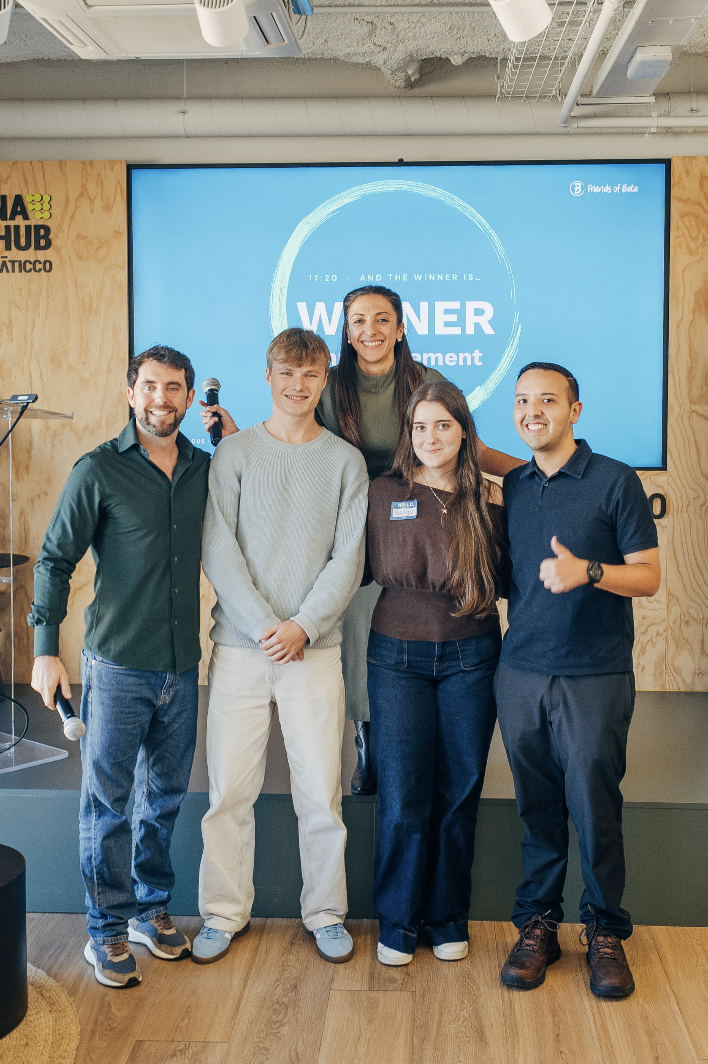
True to the format, the day closed with recognition rather than a podium. The jury highlighted four teams whose ideas and pitches stood out:
- OneRoof, connecting older people living alone who have spare rooms with students searching for affordable housing. Mentored by Roger Baranera; built and pitched by Mikołaj Szczełkun, Angel Escamilla and Brenda Sánchez, a team that had never met before and took the concept from idea to working prototype in about two hours.
- Shelfie, a connected-kitchen experience that shows what is inside your fridge without opening the door. Mentored by Tomas Reverter; built and pitched by Linshan Yang Lu and Laura Kubackova.
- Ooopsy, one-click delivery protection at checkout: orders that arrive broken, late or lost get refunded in minutes. Mentored by Jes; built and pitched by Yevhen Volodko and Jana Santalo.
- Pension Intelligence, one platform to see what pensions scattered across countries will actually pay in retirement. Mentored by Fabien; built and pitched by Mart Van de Meer, Julia Fruitos and Manaf Naser Ali Aldieb.
Prizes for the recognised teams included 100 euros per team member, mentorship invitations to future programs and a three-month seat on LettsGroup’s VentureFactory AI platform.
The event was co-hosted with Aticco Lab at the Barcelona Finance Hub, with support from Triple B, Nomu Labs, Lovable and LettsGroup. The next edition is already in the works. As Friends of Bata put it: your seat at the next Founders of Tomorrow is waiting.
About Friends of Bata
Friends of Bata is a launchpad for student founders, where ideas get tested, ventures grow and real connections happen. Through events, content, podcasts and startup challenges, it helps young builders learn by doing, with access to an international network of founders, experts and like-minded builders. In 2025, its global network supported more than 130,000 young people across 30+ universities and 20+ countries. Create. Disrupt. Repeat. Learn more at www.friendsofbata.org.
About Aticco Lab
Aticco Lab is the startup accelerator of Aticco, the Barcelona-based coworking and innovation ecosystem. It supports pre-seed and seed startups on their path to investment through tailor-made acceleration programs, a network of more than 260 mentors, open-innovation programs for corporates and an investor community, within an ecosystem of more than 4,000 Aticco Workspaces members and Aticco Ventures, its early-stage investment vehicle. Learn more at www.aticcolab.com.