

When education steps into the arena of real entrepreneurship, the learning becomes unforgettable.
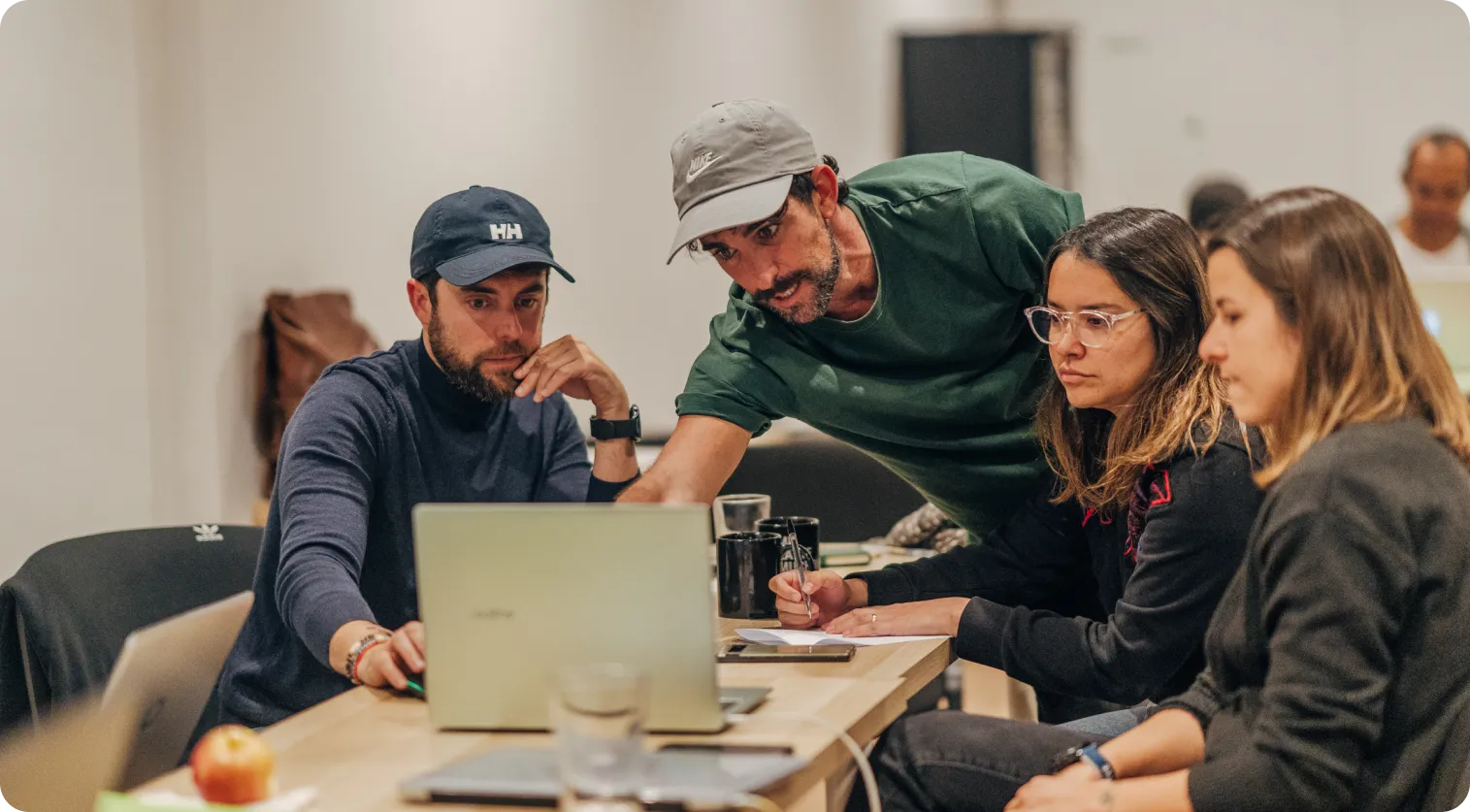
As part of Friends of Bata’s ongoing commitment to experiential entrepreneurship education, we recently welcomed students from California Lutheran University to Barcelona for another immersive experienceship, a hands-on workshop designed to bring ambitious students face-to-face with the strategic realities of building a business. This time, the founder in the hot seat was Gonzalo Comella, who invited students into the heart of his company with remarkable openness, sharing not polished hypotheticals, but the very real challenges shaping the next phase of growth for Liseners.
The brief was clear: help tackle four pressing business questions.
- How do you raise capital in a more demanding fundraising environment?
- How do you reduce customer acquisition costs when CAC becomes unsustainable?
- How do you integrate AI into operations or products without losing the human essence that makes the business meaningful?
- How do you unlock stronger organic growth?
Students stepped in not as passive learners, but as strategic problem-solvers. Here’s what emerged.
💸 Challenge 1: Fundraising in a More Demanding Market
Rather than treating fundraising as a purely investor-facing exercise, this group took a notably strategic approach: build stronger consumer visibility first, then leverage that traction to strengthen investor appeal.
Their insight was sharp. Investors are far more compelled by businesses already earning attention, trust, and cultural relevance than by projections alone.
Their proposal included:
Media-Led Brand Visibility: using PR, founder storytelling, podcasts, ecosystem exposure, and digital publications to increase visibility and market legitimacy.
Consumer-First Momentum: generating stronger audience awareness and demand signals before investor conversations begin.
Narrative Positioning: refining the company story to resonate emotionally with users while communicating strategic clarity to capital partners.
Strategic Partnerships as Validation: using ecosystem credibility and collaboration as proof points that reduce investor uncertainty.
📉 Challenge 2: Tackling High CAC:
this team approached acquisition cost from a broader strategic perspective.
Rather than focusing only on reducing spend, they explored how **expanding relevance, improving retention, and widening the addressable market** could naturally lower acquisition costs over time.
Their proposals included:
Multilingual Accessibility: introducing website translation features to make the platform more accessible across multiple markets, reducing friction for international users and supporting more efficient expansion.
Expanding Use Cases Beyond Emotional Support: positioning Liseners for adjacent high-value needs such as career growth, interview preparation, resume strategy, and entrepreneurial decision-making.
A Business Advisory Vertical: creating a dedicated offering for professionals and founders, recognizing that business-related challenges evolve over time and can generate longer-term retention.
Retention as an Acquisition Strategy: recognizing that stronger customer retention naturally fuels word-of-mouth growth, reducing dependence on paid channels.
Larger Addressable Market: broadening the platform’s relevance to attract new customer segments without proportionally increasing acquisition spend.
Their key insight: sometimes the most effective way to lower acquisition costs is not by chasing cheaper customers, but by becoming more valuable to more of the right ones.
🤖 Challenge 3: AI Without Losing the Human Core
Perhaps the most nuanced challenge of the day.
Students quickly recognized that AI should enhance what makes Liseners valuable, not dilute it. Their proposals focused on using AI where it creates efficiency and intelligence, while preserving human empathy where it matters most.
Their ideas included:
Operational Automation: using AI to streamline repetitive backend workflows, internal support systems, and operational inefficiencies
Human-Protected Touchpoint: ensuring emotionally sensitive interactions remain rooted in genuine human connection.
AI-Enhanced Personalization: leveraging AI to improve matching, responsiveness, and user experience without replacing the platform’s emotional core.
The shared conclusion: technology should create more room for meaningful human interaction, not less.
🌱 Challenge 4: Organic Growth Through Trust, Community & Emotional Relevance
This team approached growth through a deeply human lens.
Rather than relying on purely performance-driven tactics, they explored how emotional relevance, authentic storytelling, and community trust could become scalable growth drivers.
Their proposals included:
Broader Emotional Content Pillars: expanding content beyond product-specific messaging into adjacent conversations around mental health, relationships, loneliness, family, and workplace wellbeing, creating broader audience entry points.
Authentic Creator Partnerships: collaborating with wellness-focused micro-influencers and trusted creators capable of building genuine emotional resonance.
User-Generated Content & Real Stories: encouraging community storytelling and lived experiences to create trust through authenticity.
Community Building Initiatives: developing digital touchpoints such as webinars, expert sessions, and online support conversations, alongside in-person community experiences.
Credibility Through Social Proof; leveraging expert voices, testimonials, and real user stories to strengthen trust.
Stronger Calls to Action: creating clearer engagement pathways that transform passive audiences into active participants.
🚀 Learning Through Action
This is what entrepreneurship education looks like when theory meets reality.
Students were not working through hypothetical classroom simulations. They were stepping directly into real founder decision-making, navigating ambiguity, trade-offs, growth pressure, and innovation challenges in real time.
A special thank you to Professor Carmina Bech Sergarra whose continued collaboration helps make these exchanges possible, and to Gonzalo Comella for his openness, generosity, and willingness to bring future entrepreneurs into the realities of building something meaningful.
✨ What’s Next?
This is only the beginning.
Through our growing partnership with California Lutheran University, Friends of Bata continues building bridges between entrepreneurial ecosystems and academia through:
✅ Annual experienceship workshops in Barcelona
✅ Co-created startup case studies
✅ Founder-student ecosystem access
✅ International entrepreneurial programming across Europe and beyond
✅ Thought leadership and innovation exchange
Because entrepreneurship is not best learned by watching. It is learned by doing.


%20(1).jpeg)
.png)